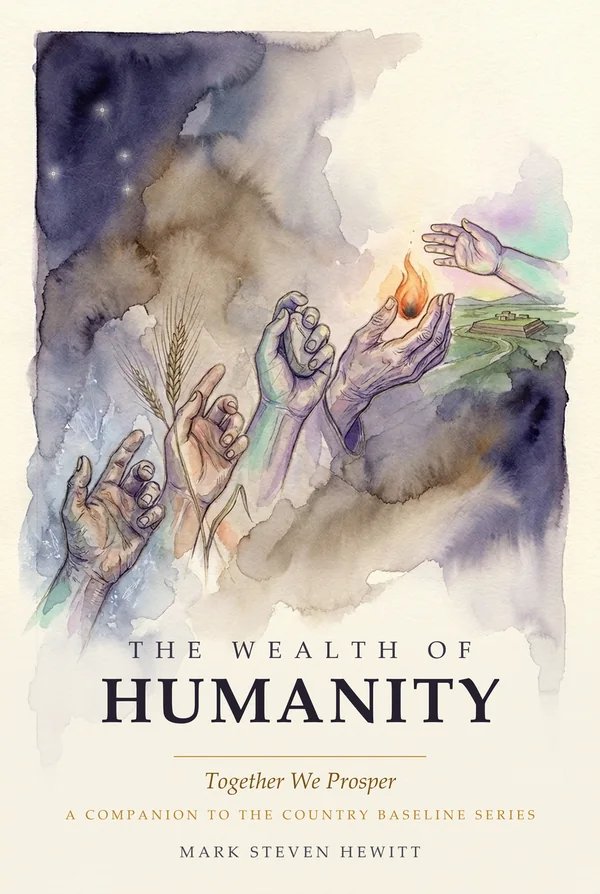
Editor’s edition · Early release
The Wealth of Humanity
Together We Prosper
Ten thousand years of what makes a people rich, from the first villages of the Indus to a country taking stock of itself. The oldest wealth we have is each other.
Together we prosper; apart we fail.
The book
Ten thousand years of what makes a people rich
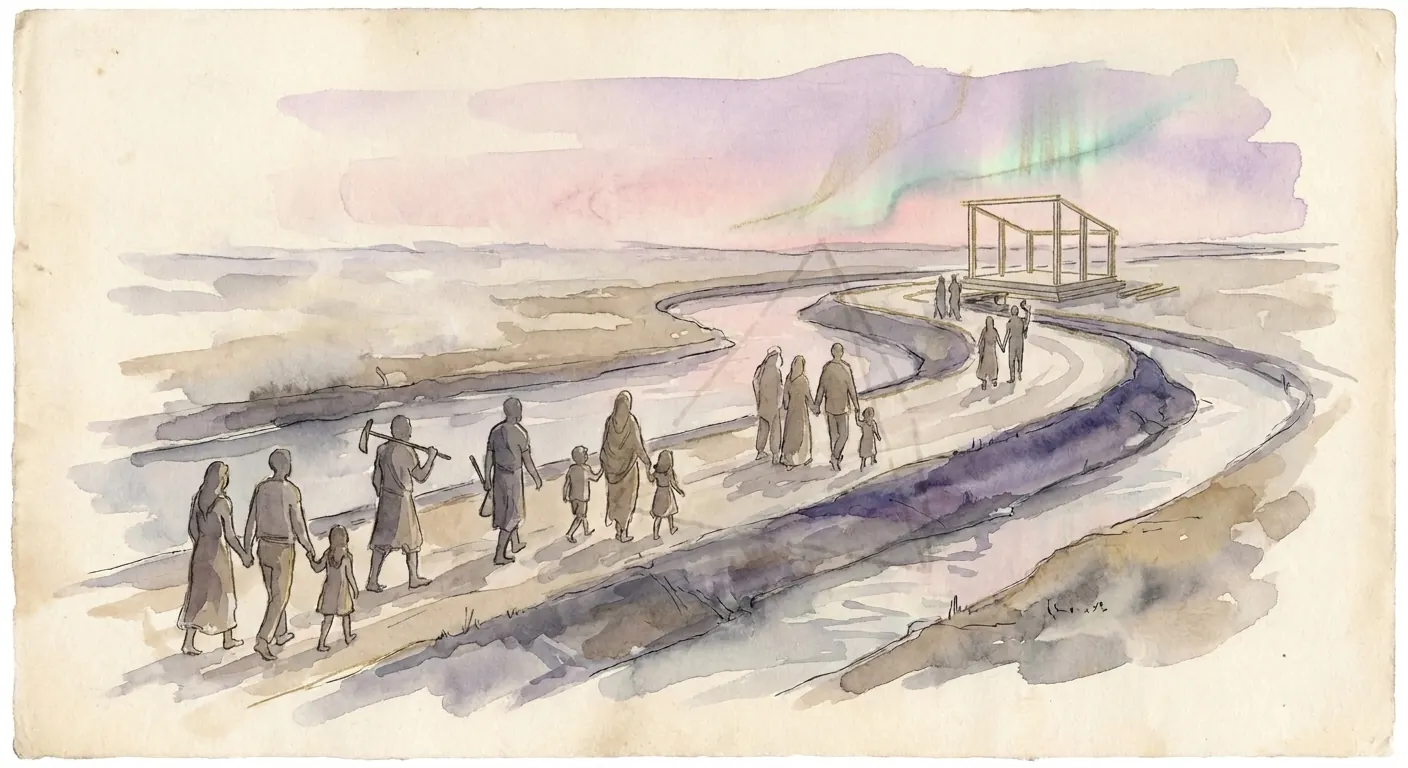
Long before money, the people of the Indus valley came through the ice ages with stone, fire, knowledge and each other. Their wealth was what they knew and what they shared, and they handed it from one generation to the next.
The Wealth of Humanity follows that inheritance across ten thousand years. It begins with the first villages at Mehrgarh and the planned cities of the Indus. It moves through what Adam Smith actually counted as the wealth of nations, Elinor Ostrom’s discovery that communities can govern what they share, and the waqf, a centuries-old way of holding wealth in trust. It names five kinds of wealth that money alone cannot measure: financial, ecological, cultural and human, social, and generational.
It then brings that history to a country taking stock of itself. Drawing on the five-volume Country Baseline Series for Pakistan, it looks at sunlight on rooftops, water beneath the fields, what the mountains really hold, and a nation that buys its fuel. It asks the questions any community must answer before it builds: what do people need, who decides, how do we know it works, and what survives after the founders are gone?
Listen
The podcast
Audio discussions and summaries of the book, introduced by the author. The discussions are AI-generated from the manuscript, and the introduction uses an AI clone of the author’s voice; each episode says so in its notes.
- TrailerIntroducing The Wealth of Humanity
- Episode 1How Ancient Networks Redefine Human Wealth
- VideoThe Long Inheritance
All episodes, notes and transcripts · RSS feed for any podcast app

The series
The Country Baseline Series
The Country Baseline Series assembles the evidence a nation and its partners need before designing regenerative communities, productive enterprise and the institutions that sustain them. Each volume describes the present with sources, assesses what is possible, and records what remains unknown.
The Country Baseline Series sets out the evidence a nation needs before it builds, and The Wealth of Humanity asks what that evidence is for. The first Country Baseline Series covers Pakistan. The volumes are in editor’s review and are not yet released.
More books by Mark S. Hewitt
The Nations of Light library
Every book is free to read at nationsoflight.com.
 The Regenerative BlueprintHow to Build the World Our Grandchildren Can Still Inherit
 The Book of MicroCitiesReimagining Human Civilization for Seven Generations
 The Currency CodeMapping the Past, Present, and Future of Global Money
 The RememberingFrom Separation to Reunion
 The Handbook of MicroCitiesA Briefing to the Heart, Not Only the Head
 The Book of TribernachiThe Language the Universe Speaks
 The MicroCity ChroniclesVolume I: The Awakening
 The Clarity Project & The Confidence ProjectTwo Eleven-Day Journeys
 The Evolution of the Authentic SelfA Journey to Aligning Mind, Body, and Spirit for Personal and Collective Transformation